






Almost nobody arrives asking for help with sleep. In demanding jobs it is usually the thing that has to be fixed before anything else will work.
By Martha Fernandez, LCSW, Licensed Clinical Social Worker and Co-Founder of CEREVITY
People come in for the thing that hurts. Low mood, dread before work, a temper that has become a problem at home. Sleep gets mentioned in passing, usually with a shrug, usually as a fact of life rather than a symptom.
At CEREVITY we treat it as the first target anyway, and not because sleep is fashionable. It is a sequencing decision. Almost every cognitive and emotional symptom people actually come in for is amplified by sleep debt, and the treatments that address those symptoms work measurably less well in someone who is not sleeping.
What counts as an actual sleep problem?
Not a bad fortnight. The threshold clinicians use for chronic insomnia disorder is difficulty at least three nights a week for three months or longer, together with real daytime consequences, whether that is impaired concentration, mood disturbance or fatigue that affects functioning.
Three nights a week for three months with no daytime cost is a different situation, and a clinician rather than a checklist should be the one making that call. But most people who eventually meet the threshold have been over it for years before anyone asks.
Total hours is the least useful thing to measure
The question is not how long you slept. It is what shape the sleep took.
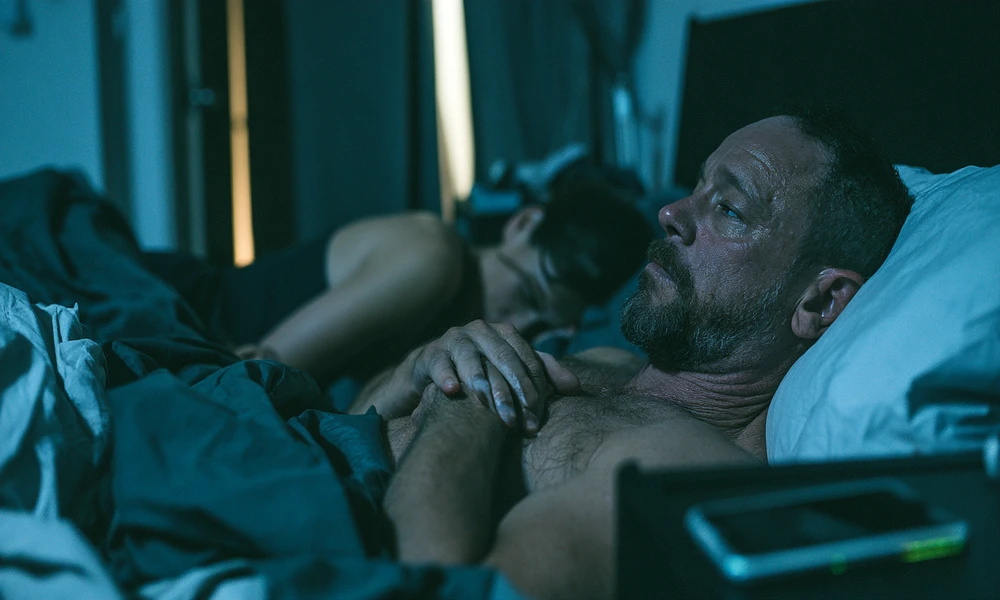
Falling asleep normally and waking at 3:40am with the mind already mid-argument is a different problem from lying awake at midnight unable to switch off. Both are different again from sleeping a full eight hours and waking unrefreshed. Those three patterns point in different directions and, in the professionals CEREVITY treats, they carry different implications.
Early-morning waking with immediate rumination is the one worth taking most seriously. It warrants a proper depression screen rather than a sleep hygiene tip sheet, and it is routinely handed the tip sheet instead.
Why sleep hygiene advice usually fails here
Because it is aimed at the wrong problem. Dim the lights, no screens after nine, keep the room cool. All sensible, all close to useless for someone whose sleep is being held open by an active nervous system rather than by bad habits.
The evidence-based treatment for chronic insomnia disorder is cognitive behavioural therapy for insomnia, and the American College of Physicians recommends it as the initial treatment rather than sedative medication. It is structured, it is time-limited, and much of the work is counterintuitive. It often involves spending less time in bed rather than more, which most people resist until it starts working.
Where a depressive episode or an anxiety disorder is also present, SSRI or SNRI medication carries first-line evidence and is often used alongside therapy. That is a conversation with a prescriber, and it is one worth having early rather than after a year of trying to sleep your way out.
What sleep is usually carrying
In the executives, physicians and attorneys CEREVITY sees, disrupted sleep is rarely a standalone problem. It is the visible edge of something that has not been assessed.
Sometimes that is a depressive episode narrated as a hard stretch at work. Sometimes it is an anxiety disorder that has been reclassified as conscientiousness. Sometimes it is a widening reliance on alcohol to come down at night, which reliably fragments sleep architecture while feeling, in the moment, like the thing that is helping.
And frequently it is medical rather than psychiatric. Obstructive sleep apnoea, thyroid dysfunction, iron deficiency, perimenopause and the after-effects of a viral illness all produce exhaustion and poor concentration that look like burnout and respond to entirely different treatment. Anyone whose exhaustion has run for months should see a physician and get whatever workup that physician judges appropriate before concluding the answer is a career change. I have seen more than one person restructure an entire role to solve what turned out to be untreated sleep apnoea.
Working out which of those is present, rather than assuming, is the first job of an assessment. It is also why what structured burnout treatment actually involves starts with a diagnostic hour instead of an open-ended conversation.
How to tell whether it is working
By measuring, not by asking how you feel. CEREVITY administers validated instruments at intake so the starting point is a baseline rather than a verdict, and re-runs them over the course of treatment. If the numbers are not moving, the approach changes. With sleep in particular that matters, because subjective recall of a bad night is unreliable and improvement often shows up in the data before it shows up in the mood.
Most people do not need to step back from work to do this. Sessions run 8am to 8pm Pacific, seven days a week, in 50-minute, 90-minute and 3-hour formats, delivered by secure video nationwide through a network of independent licensed clinicians, with a first session typically available inside 48 hours. Care is private-pay, which means the therapy generates no insurance claim and no diagnosis code submitted to a carrier.
If the sleep has been bad for years and you have never mentioned it to anyone because it did not seem like the real problem, that is worth reconsidering. It is often the thing holding everything else in place. Where low mood is also part of the picture, private treatment for anxiety and depression and the sleep work usually run together rather than in sequence.
One exception. Thoughts of death or of harming yourself are not a sleep problem. In the United States, 988 reaches the Suicide and Crisis Lifeline at any hour.
This article is general information and is not individual medical or mental health advice. If you are concerned about your own symptoms, speak with a licensed clinician or your physician.
About the author
Martha Fernandez, LCSW is a Licensed Clinical Social Worker, licensed in California, and Co-Founder of CEREVITY, a nationwide private-pay network of independent licensed clinicians treating executives, founders, attorneys and commercial pilots. USC-trained and bilingual in English and Spanish, she works on burnout, anxiety and depression in high performers, as well as trauma, grief and high-stakes transitions.