



Is Your Beard Hiding the Look You Want?
What do you notice first when you look at your face in the mirror, a sharp jawline, your hairstyle, or the beard that frames your face? For many men, a beard has become more than facial hair. It can influence how the jawline looks, complement a hairstyle, and become an important part of personal appearance. But what happens when the beard is patchy, uneven, very sparse, or refuses to grow in certain areas? You may have tried different oils, grooming products, supplements, or beard styles. Yet, if certain areas naturally have very little hair, these solutions may not provide the change you are looking for.
This is where a beard transplant may become an option worth discussing. But choosing a clinic should not be based simply on advertisements or impressive before-and-after photographs. The quality of treatment planning, surgeon’s experience, donor-hair assessment, hair direction, facial proportions, and realistic expectations all matter.
What Exactly Is a Beard Transplant?
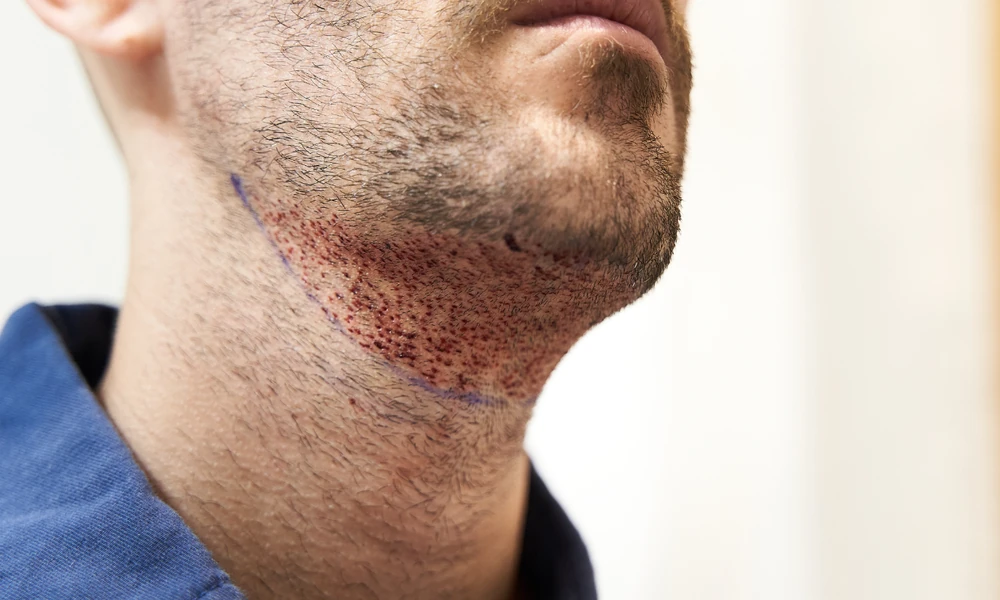
A beard transplant is a procedure in which hair follicles are taken from a donor area, usually the scalp, and carefully transplanted into areas of the face where additional facial hair is desired.
The transplanted follicles can be used to improve areas such as:
- Cheeks
- Jawline
- Chin
- Moustache
- Sideburns
- Patchy beard areas
- Certain scarred areas, depending on individual suitability
The objective is not simply to add more follicles. It is to create facial hair that follows the natural direction and pattern of beard growth. That same principle is important when considering facial hair restoration.
Did You Know? Beard Hair Loss Can Have Different Causes
Not every patchy beard is simply the result of genetics.
The American Academy of Dermatology notes that alopecia areata can affect the beard and may appear as round or oval patches of hair loss. This is why someone experiencing sudden or unusual beard loss should first seek an appropriate medical evaluation rather than immediately assuming that a transplant is required. A consultation can help determine whether the problem is related to natural growth patterns, previous injury or scarring, a medical condition, or another factor.
1. Start With a Proper Facial Hair Assessment
Before considering a beard hair transplant, ask an important question:
“Why is my beard not growing the way I want?” A proper consultation should look at the current beard pattern, density, skin condition, donor hair availability, previous scars or injuries, and the areas you want to improve.
For example, one person may have a naturally thin beard across both cheeks. Another may have good cheek growth but almost no hair along the jawline. Someone else may have a scar that has interrupted beard growth. These three people should not necessarily receive the same treatment plan. The amount and placement of grafts should be based on the individual’s facial structure and goals.
2. Natural Direction Matters More Than You Think
Imagine a beard where every transplanted hair grows straight outward. Even if the beard looks dense, would it look natural? Probably not. Facial hair has a particular direction and angle of growth. Hair on the cheeks, moustache, chin, and jawline can behave differently. Therefore, graft placement requires attention to the direction and angle of existing facial hair. This is one reason why a beard transplant should be approached as a precision procedure rather than simply a way of increasing hair count. The aim is to help new follicles blend with existing facial hair.
3. Hairline Design Isn’t Just for the Scalp
People often associate hairline design with scalp transplantation. But beard restoration also requires careful aesthetic planning. Consider the outline of a beard. Where should the cheek line begin?
How should the moustache connect with the beard?
How should the jawline appear?
Should the beard be dense everywhere, or should certain areas remain lighter for a more natural appearance? These decisions can change the final look significantly. A skilled surgeon considers facial proportions rather than drawing an identical beard outline for every patient.
4. What Should You Look for in a Beard Transplant in Chandigarh?
If you are researching a beard transplant in Chandigarh, don’t limit your comparison to package prices. Instead, look at the complete treatment process.
Check the Surgeon’s Qualifications
Understand who will assess your case and perform the procedure.
Ask About the Donor Area
The donor area needs to be assessed before deciding how many follicles can reasonably be used.
Understand the Technique
Ask which extraction and implantation approach is being recommended and why it is suitable for your case.
Look at Relevant Results
Scalp-transplant photographs alone may not tell you much about a surgeon’s approach to facial hair restoration.
Discuss Expectations
A good consultation should explain what can realistically be achieved with your available donor hair and existing facial structure. These questions can help you make a more informed decision.
5. Why Dr. Sandeep Singla Is Relevant to Your Consultation
At Clinic Reborn, facial and hair restoration services are associated with Dr. Sandeep Singla, a cosmetic and plastic surgeon.
Clinic Reborn’s website identifies Dr. Sandeep Singla is an experienced cosmetic and plastic surgeon and highlights his involvement in hair-restoration procedures. His official website provides further information about his professional background, qualifications, areas of expertise, and surgical practice. For anyone considering facial hair restoration, reviewing the surgeon’s credentials is an important part of researching a clinic.
Instead of asking only, “Which clinic has the best offer?”, also ask:
“Who is going to plan and perform my procedure?” That question can lead to a much more meaningful consultation.
6. Two Men, Similar Problem, Different Plans
Consider two hypothetical men, Rahul and Arjun. Rahul has a naturally thin beard on both cheeks. His chin and moustache already have reasonable density, but the sides look sparse. His main goal is to create a fuller appearance without making the beard look artificially heavy. Arjun has a different concern. He has good beard growth on one side but a visible patch on the other side caused by an old injury. He wants the area to blend more closely with the surrounding beard. Would it make sense to give both patients the exact same number of grafts and identical beard design?
No.
Rahul may need grafts distributed across selected cheek areas to create balanced density. Arjun may need more targeted placement around the affected area, depending on the condition of the scarred skin and his suitability.
This example shows why a personalized beard transplant plan matters. The goal isn’t “maximum grafts.” The goal is appropriate graft placement for the individual’s face.
Did You Know? More Grafts Do Not Automatically Mean a Better Result
It can be tempting to compare clinics by asking how many grafts they offer. But graft quantity alone does not determine aesthetic quality. The available donor supply, placement strategy, existing facial hair, skin characteristics, and long-term expectations all matter. For facial hair restoration, the same principle makes careful assessment important.
7. What About a Beard Transplant in Zirakpur?
People considering a beard transplant in Zirakpur may have access to clinics offering different techniques and packages. But convenience should not be the only consideration.
Before booking, ask about:
- Doctor qualifications
- Consultation process
- Donor-area assessment
- Graft planning
- Facial hairline design
- Procedure technique
- Recovery guidance
- Follow-up appointments
- Realistic expected results
Clinic Reborn’s FUE service describes individual follicle extraction and personalised treatment planning, along with post-treatment care. You can also explore Clinic Reborn’s hair transplant and hair-restoration services to understand its broader approach to hair restoration.
8. What Should You Expect From Beard Transplant Before and After?
Searching online for beard transplants before and after photographs is understandable. Photographs can help you understand what types of improvements may be possible. However, they should not be treated as a guarantee of your own result. Every face is different.
Your donor hair, facial hair density, skin characteristics, existing beard pattern, graft requirements, and healing process can all influence the outcome.
A useful before-and-after comparison should ideally show:
Before → Treatment plan → Early recovery → Growth phase → Later result
Remember that transplanted hair does not usually appear as a fully developed beard immediately after treatment. Hair growth takes time, and follow-up is an important part of the process.
Understanding the Recovery Journey
One of the most important things to understand before a beard transplant is that the procedure is only one stage of the journey. After transplantation, the treated area needs time to heal. Some transplanted hairs may shed during the early period before new growth becomes visible.
Your surgeon should provide specific aftercare instructions based on your procedure. These may include guidance regarding washing, touching the treated area, physical activity, sleeping position, medications, and follow-up appointments.
Is a Beard Transplant Right for Everyone?
Not necessarily.
A beard transplant may be considered for people with naturally sparse facial hair, certain patterns of patchiness, or selected areas affected by scars or previous injury. But suitability depends on individual factors. For example, someone with a sudden new bald patch may need medical evaluation first. The American Academy of Dermatology notes that beard hair loss can occur with alopecia areata, which may require a different treatment approach. This is why a consultation should come before making a final decision.
Look Beyond the Procedure
A beard can change the appearance of the entire lower face. That’s why restoration should be approached with the same attention to proportion, balance, and natural appearance that you would expect from any aesthetic procedure. Whether you’re researching a beard transplant because your beard is naturally sparse, uneven, or affected by a scar, start by understanding your individual situation.
Clinic Reborn offers hair-restoration services and consultations focused on personalised treatment planning. For additional information, you can also read Clinic Reborn’s detailed guide on beard transplant cost and treatment considerations. And if you’re ready to discuss your specific concerns, you can contact us for a consultation.
The Right Beard Is About More Than Density
A fuller beard may be the goal, but the real objective is usually balance. The right treatment should consider your face, existing hair, donor supply, beard pattern, expectations, and long-term appearance. So before choosing a clinic, don’t simply ask:
“How many grafts will I get?”
Ask:
“How will the treatment be planned specifically for my face?” That question can help you approach beard restoration with realistic expectations and a clearer understanding of what the procedure involves
1. What is a beard transplant?
A beard transplant involves transferring hair follicles from a suitable donor area, usually the scalp, to areas of the face with sparse or missing hair. The follicles are strategically placed to follow natural beard direction and create a fuller, balanced appearance.
2. Who can consider a beard transplant?
Men with naturally sparse facial hair, uneven beard growth, selected scars, or areas with limited beard development may be potential candidates. However, suitability depends on donor-hair availability, skin condition, the cause of hair loss, and individual treatment goals.
3. Does a beard transplant look natural?
Natural-looking results depend on careful planning, appropriate graft selection, facial proportions, and the direction and angle of implanted follicles. A qualified surgeon should assess your existing beard pattern and explain what level of density and coverage can realistically be achieved.
4. How long does it take to see beard transplant results?
Beard growth develops gradually after transplantation. Early healing occurs first, while visible new growth develops over the following months. Individual timelines vary depending on healing, graft survival, hair characteristics, and aftercare. Your surgeon can explain a more personalised expected timeline.